
The Oak Island story has a short answer. A teenager named Daniel McGinnis found the Money Pit in 1795, and the people connected to it since stretch from legendary pirates to a future U.S. president to the modern treasure hunters Rick and Marty Lagina. Some of these names are documented diggers. Others belong to legend and debated theory, and the list below keeps them clearly apart.
That distinction matters on an island where fact and folklore have been tangled for more than two centuries. McGinnis, along with fellow discoverers Anthony Vaughan and John Smith, left a trail of records. Captain William Kidd and Edward Teach, better known as Blackbeard, appear in the stories locals have told for generations, though no proof ties them to the pit. Sir Francis Bacon and Marie Antoinette sit even further out on the edge of theory, which is exactly why they keep drawing curious minds.
Then there are the diggers with real shovels and real reputations. Franklin D. Roosevelt took part in an early expedition as a young man, and twentieth-century hunters like Gilbert Hedden and Frederick Blair chased the mystery with determination and plenty of expense.
Nine names follow, each with the context you need to tell the documented from the debated. Keep reading if you’re planning a visit to Mahone Bay, because the people behind this puzzle make the shoreline and its quiet coves feel a lot less ordinary.
How We Chose These Names: Documented Digs, Local Lore, and Open Questions
Picking names for a list like this takes a bit of judgment, so here’s exactly how we did it. Every figure falls into one of three groups, and we’ll tell you which one as we go:
- Documented dig involvement: people the historical record places at actual Oak Island excavations.
- Enduring legend or lore: names tied to the island by stories passed down for generations.
- Debated or unproven connections: figures whose link can’t be confirmed, but can’t be ruled out either.
The first group stands on the firmest ground. Accounts of the early digs, the later syndicates, and the modern search give us names and dates we can lean on. The second and third groups are where things get wonderfully murky. Pirates, queens, and scholars appear in theories that are long on atmosphere and short on proof, and we won’t pretend otherwise.
But we also won’t brush them aside. Unproven isn’t the same as impossible, and the unanswered questions are a big part of why Oak Island still pulls people in. Wherever the record is solid, we say so. Wherever it’s open to interpretation, we say that too.
For flavor and context, we’ve also drawn on the kinds of tales folks still share around Chester and Mahone Bay, where the legends feel less like history lessons and more like family stories.
The Treasure Hunters and Legends Who Shaped Oak Island’s Story
1. Daniel McGinnis, the Teenager Who Started It All (1795)
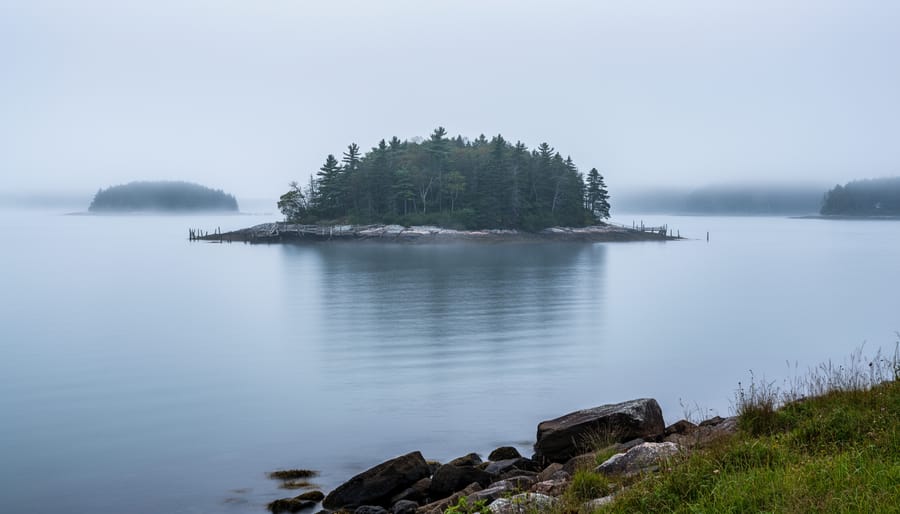
In the summer of 1795, a teenager named Daniel McGinnis wandered into the woods of Oak Island, a quiet, tree-covered speck in Mahone Bay. Few people lived nearby, and the island was thick with oak. Then something odd caught his eye: a shallow depression in the ground, and above it, a ship’s tackle block dangling from a branch.
That’s the 1795 depression and block tackle that set everything in motion. Young McGinnis, like any curious local, reached for a shovel and started digging.
Maybe that’s why the story still pulls visitors in. A boy, a hollow in the earth, and a rope swinging from an old oak: it’s simple, and it’s the spark behind more than two centuries of searching.
2. Anthony Vaughan and John Smith, the Fellow Discoverers
Daniel McGinnis didn’t dig alone. Local tradition names two companions, Anthony Vaughan and John Smith, as the other pair of hands in that first dig. Picture three young men with shovels, a lantern’s worth of curiosity, and a sunken patch of ground beneath an old oak.
They began digging near the tackle block, and what they found was strange. About every ten feet down, they reportedly struck a layer of oak planks, a tidy, deliberate floor in a place no one expected to find one. Tools, muscle, and stubbornness could only carry them so far, and the pit proved deeper than their resources allowed.
Details from that era come to us through retelling, so some of it remains open to interpretation. Still, there’s something deeply human here: ordinary islanders, not seasoned adventurers, stumbling into a puzzle that would outlast them all.
3. Captain William Kidd, the Pirate of Legend
Few names glitter in treasure lore quite like Captain William Kidd. A Scottish-born privateer turned accused pirate, he was hanged in London in 1701, and the legend that followed him was almost as big as the sea he sailed. Tales of buried loot attached themselves to his name from the start, and Oak Island, with its mysterious shaft and elaborate engineering, became one of the places storytellers pointed to.
Here’s the honest part: there’s no proof Kidd ever set foot on the island. No logbook, no map, no artifact has tied him to the Money Pit. Yet the idea endures because it fits so neatly. A pirate famed for hiding his plunder, a remote island on a busy Atlantic route, and a puzzle that has frustrated hunters for two centuries.
So is it fact? No. Is it fun to wonder about? Absolutely. Standing on the shores of Mahone Bay, it’s easy to imagine why people keep asking.
4. Edward Teach (Blackbeard), the Pirate Who Might Have Buried More Than Rum
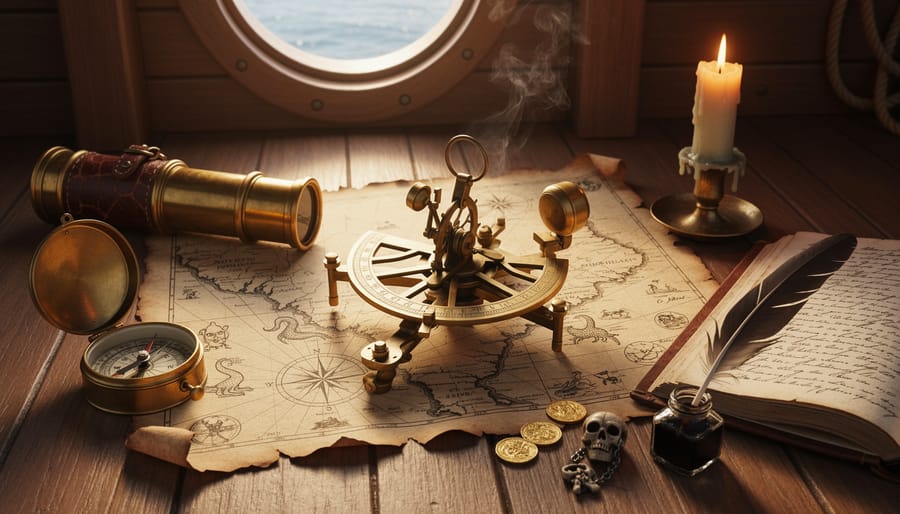
Edward Teach, better known as Blackbeard, is the second pirate whose name keeps surfacing in Oak Island lore. Like Kidd, his link to the island rests on popular theory rather than any documented dig or discovery, and it’s worth saying so plainly. Still, the idea has real staying power.
Blackbeard prowled the Atlantic and Caribbean in the early 1700s, a time when the North American coast was crowded with merchant ships, privateers, and outlaws. Nova Scotia’s sheltered bays and countless islands, Mahone Bay among them, offered just the kind of quiet anchorage a captain might favor. Local storytellers have long enjoyed picturing sails slipping into those waters under cover of fog.
No hard evidence ties him to the Money Pit, and that’s precisely why the tale endures. It asks a tantalizing question: could the man who made a fearsome legend of himself have buried more than rum?
5. Sir Francis Bacon, the Scholar at the Center of Manuscript Theories
Sir Francis Bacon was an Elizabethan statesman, philosopher, and essayist, and he turns up in some of the most intellectual theories about Oak Island. The idea runs like this: Bacon, or a circle of thinkers around him, may have concealed precious manuscripts or secret knowledge somewhere safe, and a deep, booby-trapped shaft on a remote island off Nova Scotia could be just the place.
Why does it appeal? Bacon lived in an age of ciphers, hidden meanings, and whispered authorship debates, so the notion of a buried library feels oddly fitting. Some theorists point to the complexity of the Money Pit itself, arguing that only a well-educated mind could have planned it.
No document ties Bacon to Oak Island, and that’s the honest picture. Still, for history buffs, it’s a gloriously open question.
6. Marie Antoinette and the French Crown Jewels Theory
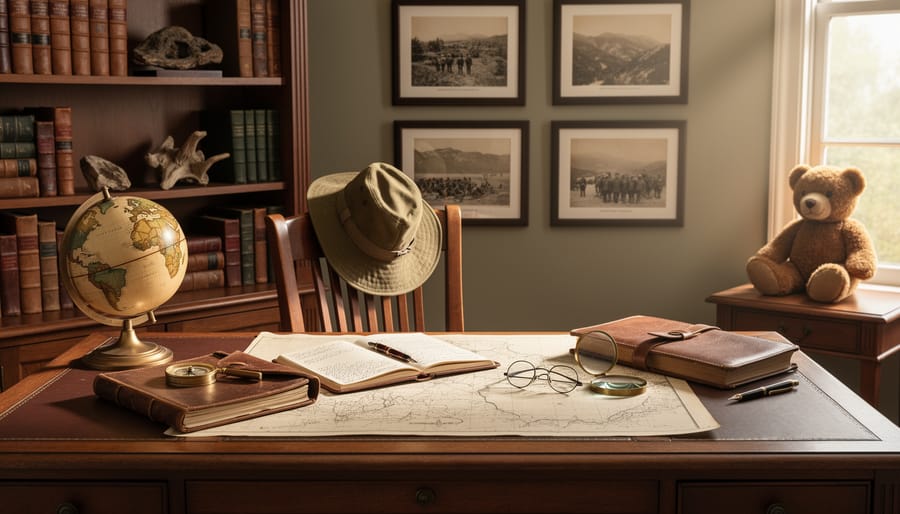
Few Oak Island theories feel as cinematic as the one involving Marie Antoinette. The story goes that during the turmoil of the French Revolution, the queen’s jewels, or even a larger share of the French crown treasure, were spirited away across the Atlantic to keep them from the revolutionaries. Nova Scotia, with its French colonial past, becomes the imagined destination.
The Fortress of Louisbourg, the great French stronghold on Cape Breton Island, is often mentioned as a possible stepping stone for such a journey. Supporters of the idea suggest that people with the right connections and the right ships could have used that French presence to hide something precious along this coast.
Here is the honest part: no document proves the queen’s treasure ever reached Mahone Bay. It remains a debated, unproven idea. But it has all the ingredients of a great legend: royalty, secrecy, a daring escape, and a hidden vault waiting in the dark.
7. Franklin D. Roosevelt, the Future President Who Dug at Oak Island
Of all the famous names tied to Oak Island, this one is the easiest to back up. In 1909, a young Franklin D. Roosevelt, years before he would become president, took part in an Oak Island expedition. He was a shareholder in the Old Gold Salvage Group, and he made the trip to the island himself. You can read more about FDR’s 1909 Oak Island role and the salvage company behind that dig.
Picture it: a future leader of the United States standing on this little island in Mahone Bay, drawn by the same pull that has tugged at treasure hunters for more than two centuries. He didn’t find the treasure, and the Money Pit kept its secrets, as it always does.
That’s what makes it such a great fun fact for visitors. When you walk the island’s shoreline and think about who has stood there, you can add a president to the list.
8. Gilbert Hedden, Frederick Blair, and the Twentieth-Century Treasure Hunters
Once the Truro Company and the early nineteenth-century syndicates faded, the twentieth century brought a new wave of dreamers, and some of them left their mark in ways you can still sense on the ground. Frederick Blair is the name most tied to this era. He spent decades organizing syndicates, studying the island’s coconut-fibre and flagstone clues, and trying to solve the flooding puzzle that had beaten everyone before him. His long campaign is well documented, and it shows how a single obsession could outlast several fortunes.
Gilbert Hedden, a businessman from the United States, arrived in the 1930s with serious money and a bold plan. He dug a deep shaft of his own and helped spark fresh public fascination, though the island, true to form, swallowed his plans too.
Locals around Chester and Mahone Bay will tell you the same thing: every shaft, tunnel, and trench changed the island’s shape. The scarred, reworked terrain visitors notice today is partly the legacy of these hunters. Standing there, you’re looking at a landscape built by hope, stubbornness, and a mystery that refuses to be solved.
9. Rick and Marty Lagina, the Modern Hunters Bringing Oak Island to the World

Rick and Marty Lagina are the most recognizable names in the modern chapter of the Oak Island story. The Michigan brothers, whose long-running search has been followed on television by viewers around the world, turned a regional mystery into a global conversation. Marty, with his background in energy and engineering, and Rick, the driving force behind the original fascination, assembled crews, mapped the terrain, and brought modern tools to a puzzle that had stumped generations before them.
Their exposure did something else, too. Curious fans started booking trips to Nova Scotia to see the island’s landscape for themselves, and that curiosity helped turn Oak Island into a genuine travel destination. Standing on the shores of Mahone Bay, you can almost feel the weight of all those earlier digs.
And here’s the best part: the hunt isn’t over. Theories are still being tested, questions remain open, and the next discovery could rewrite what we think we know.
Walking in Their Footsteps: Visiting Oak Island and Mahone Bay
Standing on the shoreline near Oak Island, it’s hard not to picture young Daniel McGinnis pushing through the trees, or Franklin D. Roosevelt eyeing a shaft in 1909. The ground itself ties these names together, and the Mahone Bay area gives you plenty of ways to feel that connection. If you’ve followed the latest chapter of the story, you may already know about the Money Pit remake a reminder that the hunt is still very much alive.
Here are some ways to explore the island’s history:
- Guided tours that walk you through the stories of the treasure hunters, from the earliest diggers to the modern searchers.
- Local trails along the coast that offer sweeping views of the bay and the island itself.
- Boat excursions on Mahone Bay for a sailor’s-eye look at the island and its surroundings.
- Nearby heritage stops that reveal the region’s seafaring past and shipbuilding roots.
- Cozy places to stay around Mahone Bay and Chester, so you can linger after sunset.
A local tip: don’t rush. Pair your Oak Island time with the area’s small museums, where artifacts and old photographs add flesh to the names on this list. Then wander through Chester and Mahone Bay, where the harbour views and the three famous churches on the waterfront make for a memorable afternoon. Locals love to swap Oak Island stories, so strike up a conversation and you might hear a theory you’ve never come across.
Tour options and access can change, so check the site for the latest tour information before you plan your trip.
Your Oak Island Questions About Historical Figures, Answered
Who found the Money Pit?
Tradition credits Daniel McGinnis, who noticed a curious depression and a ship’s tackle block hanging from an oak in 1795, with help from Anthony Vaughan and John Smith. The details of that first dig come to us through retellings, which is part of the mystery’s charm.
Was Franklin D. Roosevelt really involved?
Yes, and it’s one of the best-supported famous links. He joined an expedition in 1909, years before he became president.
Are the pirate connections proven?
Not yet. Captain Kidd and Blackbeard are tied to the island by long-standing legend, so treat them as open questions rather than settled history.
Which historical theory is the most popular?
Pirate treasure is the classic favorite, but the Marie Antoinette and French crown jewels idea and Sir Francis Bacon’s manuscript theory both have devoted followings. None is confirmed, and each adds its own thread to the puzzle.
Can you see where these hunters dug? You can get a feel for the terrain by joining a guided tram tour and the surrounding shoreline rewards a stroll along the Barrington Bay Trail. If you’d like a base nearby, Oak Island Resort puts you close to the water and the legends. Always check the site for current tour details before you go.
The Final Takeaway: A Mystery Still Being Written
Whether they dug with shovels, sailed under black flags, or only haunt the legends, the people tied to Oak Island are what keep it magnetic. A teenager’s hunch, a future president’s expedition, a pair of brothers still searching today: each adds a layer to a story that refuses to settle. Some of these links are documented, some are folklore, and some sit in that delicious gray zone where nobody can say for sure.
The island is no longer just a name on a screen. Now that you know whether Oak Island is open to the public you can plan a visit, stand on the same shores, and add your own chapter to a mystery that is still being written.