
The Money Pit on Oak Island isn’t getting a Hollywood remake. Instead, the real-life treasure hunt continues to unfold with sophisticated excavation technology and fresh discoveries that outpace any fictional drama. As of 2026, the legendary shaft where searchers have pursued elusive treasure for over two centuries remains an active archaeological site, drawing visitors who want to witness history in the making rather than watch it on screen.
What makes this ongoing excavation compelling is the blend of centuries-old mystery and cutting-edge exploration methods. The original Money Pit, discovered in 1795, has claimed lives, fortunes, and countless theories about what lies beneath layers of engineered flood tunnels and wooden platforms. Modern teams now deploy ground-penetrating radar, sophisticated drilling equipment, and remote imaging to probe depths that defeated earlier treasure hunters armed only with shovels and determination.
The site’s allure hasn’t diminished with time. Visitors to Oak Island today can explore the interpretive center, view excavation sites from designated areas, and grasp why this mystery has captivated generations. The ongoing work reveals tantalizing artifacts spanning different eras, from medieval European coins to ship timber fragments, each discovery fueling fresh speculation about who buried what and why.
Whether the pit contains pirate gold, religious artifacts, or something entirely unexpected remains the central question driving both professional archaeologists and amateur enthusiasts. The real story unfolding on Oak Island proves far more gripping than any cinematic version could capture.
What the Original Money Pit Legend Really Tells Us
The Money Pit legend begins with a summer day in 1795 when a teenager named Daniel McGinnis stumbled upon a mysterious depression in the ground while exploring Oak Island. According to the story, he noticed a circular indent beneath an old oak tree with a branch showing signs of pulley wear, suggesting something heavy had been lowered into the earth decades earlier. Intrigued by tales of pirate treasure in the area, McGinnis returned with friends John Smith and Anthony Vaughan to investigate.
What they found launched over two centuries of obsession. As the trio dug, they encountered wooden platforms every ten feet, oak logs deliberately placed to obstruct their progress. At thirty feet down, they hit what seemed like a stone or hard surface and, lacking proper equipment, abandoned the dig temporarily. When they returned, the shaft had flooded with seawater, introducing another element that would plague treasure hunters for generations: an apparent booby trap designed to protect whatever lay beneath.
The early 1800s saw the first organized attempts to reach the treasure. The Onslow Company resumed digging in 1804, discovering additional platforms at regular intervals and, at ninety feet, a mysterious stone inscribed with symbols that some claimed promised “forty feet below, two million pounds are buried.” They breached this level only to have the shaft flood overnight with sixty feet of water, water that couldn’t be bailed out faster than it refilled.
This pattern repeated through the nineteenth century. The Truro Company in 1849 drilled deeper and reported hitting what felt like wooden chests and metal, but flooding always intervened. Each failure added layers to the legend and established the technical challenges that modern treasure hunters are now attempting to overcome with twenty-first-century solutions.
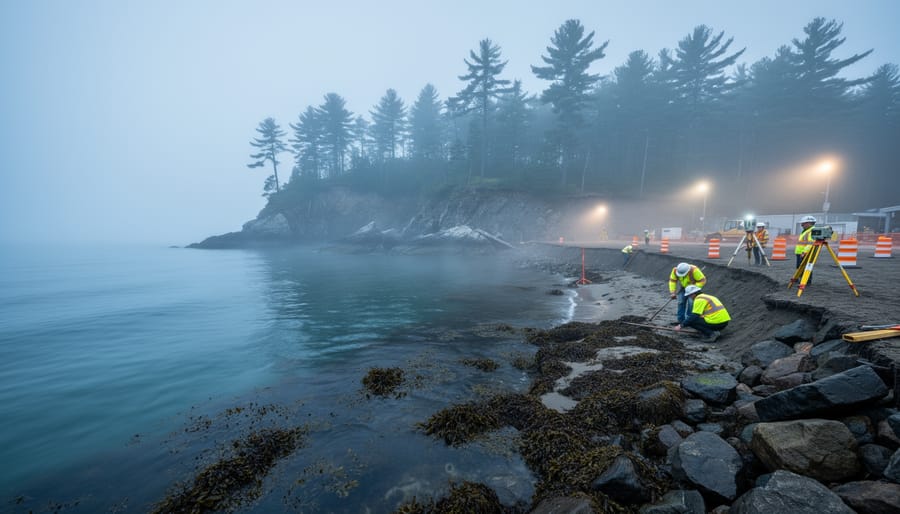
The Modern Money Pit: A 21st Century Remake
Technology Transforms the Ancient Quest
Modern treasure hunters on Oak Island wield tools their predecessors couldn’t have imagined. Where 18th-century searchers relied on shovels and buckets, today’s teams deploy ground-penetrating radar that maps underground structures without disturbing a single grain of soil. This technology reveals anomalies dozens of feet below the surface, guiding excavation decisions with data rather than hunches.
Sonar equipment now explores water-filled tunnels that once drowned searchers’ hopes. Remotely operated cameras snake through flooded shafts, capturing footage of caverns and potential artifacts that previously existed only in speculation. These eyes beneath the earth have already identified multiple previously unknown chambers and tunnel systems.
Drilling technology represents perhaps the biggest leap forward. Modern oscillator systems can sink caissons through earth and bedrock with precision unthinkable in earlier centuries. Computer-controlled rigs extract core samples from precise coordinates, allowing researchers to analyze soil composition and detect traces of worked wood or metal at extreme depths without massive excavation.
What once required months of dangerous manual labor now happens in days. Teams can test multiple theories simultaneously, ruling out dead ends quickly while pursuing promising leads with surgical accuracy. The mystery remains unsolved, but the tools available in 2026 finally match the scale of the challenge that’s frustrated treasure hunters for over two centuries.
New Excavation Sites, Same Old Mystery
While the original Money Pit remains off-limits to casual exploration, modern treasure hunters have expanded their search across Oak Island with several fresh excavation sites that visitors can observe from designated viewing areas.
The most significant recent dig is what researchers call the “Garden Shaft,” located roughly 200 feet south of the original Money Pit. This site emerged after ground-penetrating radar detected potential man-made structures beneath the surface. Unlike the waterlogged chaos of the historic pit, this location offered firmer ground and less flooding, at least initially. Teams have extracted wood samples and metal fragments that fuel ongoing speculation.
Another focal point is the “Uplands” area near Smith’s Cove, where excavators discovered what appears to be an artificial beach and possible box drains. Some theorists believe these structures were designed to flood the Money Pit as a booby trap. Visitors can view these coastal excavations from marked pathways during tour season, watching as crews carefully expose centuries-old stonework.
The “swamp area” has also become a hotspot for investigation. Originally dismissed by earlier treasure hunters, recent efforts have drained portions to reveal wooden structures and potential ship remnants. While theories range from hidden treasure repositories to simple historical logging operations, the mystery deepens with each layer of mud removed.
Each new dig site offers a fresh angle on the same tantalizing question: what’s really buried on this island?
How the ‘Remake’ Differs from the Original Quest
The most striking difference between the original treasure hunters and today’s excavators isn’t just the technology, it’s the entire philosophy of the search. When the Onslow Company first dug in 1804, they worked with shovels, timber, and blind faith. Today’s searchers bring seismic imaging, remote-operated vehicles, and metallurgical analysis to the same ground. Yet both groups share an identical obsession with what lies beneath.
| Category | Then (1795-1960s) | Now (2006-2026) |
|---|---|---|
| Equipment | Shovels, hand pumps, wooden cribbing | Ground-penetrating radar, oscillator drills, robotic cameras |
| Theories | Pirate treasure, single burial site | Multiple theories: Templar artifacts, Spanish manuscripts, complex tunnel systems |
| Funding | Private syndicates, personal savings | Television production budgets, corporate sponsorships |
| Public Access | None, private operations only | Tours, viewing platforms, interpretive centers |
| Documentation | Scattered journal entries, word of mouth | High-definition footage, scientific reports, real-time updates |
The original searchers drowned in their own ambition, literally. Water flooding has defeated every generation of treasure hunters, from the Truro Company’s catastrophic shaft collapse in 1861 to Robert Restall’s tragic death in 1965. Modern excavators face the same flooding challenge but attack it with industrial dewatering systems and steel caissons that can withstand pressures the old-timers never imagined.
What hasn’t changed is the maddening way Oak Island reveals just enough to keep you digging. The 1795 crew found flagstones and oak platforms. Today’s searchers find medieval coins and fragments of parchment. Both discoveries raised more questions than answers. Both kept the shovels moving.
Perhaps the biggest shift is transparency. Historical treasure hunters guarded their findings like state secrets, fearing claim-jumpers and competitors. Now, every bone fragment and pottery shard gets catalogued, analyzed, and debated by thousands of armchair archaeologists online before the mud’s even dried.
What Visitors Can Witness Today
Standing at the edge of Oak Island today, you’re not just observing a historical site, you’re watching an active treasure hunt unfold in real time. The island has evolved from a restricted private property into a destination where visitors can witness genuine excavation work, though with carefully managed access that balances public interest with ongoing operations.
The Oak Island Interpretive Centre serves as your gateway to understanding the modern dig. Located in nearby Western Shore, the center features artifacts recovered from recent excavations, interactive displays showing the evolution of search techniques, and real-time updates about current digging operations. Staff members, many with direct connections to the treasure hunting community, provide context that bridges the gap between the legend you’ve heard about and the muddy, mechanical reality you’ll observe.
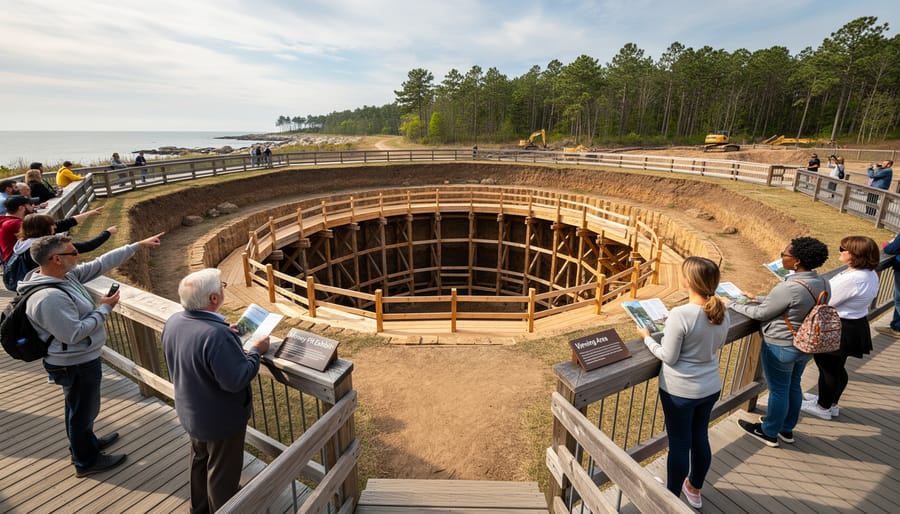
Tour access to Oak Island itself operates on a seasonal schedule, typically running from late May through early October when weather conditions permit both excavation work and visitor safety. The standard tour lasts roughly ninety minutes and includes viewing platforms overlooking active or recent dig sites, though you won’t walk directly up to operating heavy machinery. What you will see depends entirely on the current phase of work, some visitors catch drilling operations in progress, while others observe the painstaking process of examining extracted core samples under field tents.
The infamous Money Pit area remains the focal point, though the exact viewing distance varies based on active operations. On quieter days, guides can bring groups closer to historical shaft locations and explain the layered history beneath your feet. Photography is permitted in designated areas, and many visitors report that seeing the scale of the operation, the industrial drilling rigs, the systematic grid patterns, the sheer depth of the excavations, makes the centuries-old obsession suddenly comprehensible.
Book tours well in advance during peak summer months. The island limits daily visitor numbers to protect both the ongoing work and the site’s integrity. Weather can affect access with little notice, so build flexibility into your Oak Island plans. What you’re witnessing isn’t a static museum piece, it’s a mystery being actively pursued, which means each visit captures a unique moment in this remarkable remake.
The Cast of Characters in This Real-Life Remake
Every treasure hunt needs its heroes, and Oak Island’s modern quest features a fascinating cast of determined searchers who’ve devoted years, sometimes decades, to unraveling the Money Pit mystery.
The Lagina brothers, Rick and Marty, stand at the center of today’s excavation efforts. Rick brings unbridled passion and a lifelong obsession with Oak Island, while Marty contributes engineering expertise and business acumen. Their partnership represents the perfect blend of dreamer and pragmatist, keeping the massive operation funded and focused despite countless setbacks.
Craig Tester, a longtime friend and business partner of the Laginas, serves as the team’s technical anchor. His engineering background and methodical approach balance the more speculative theories that swirl around the island. When complex drilling operations hit unexpected obstacles, Craig’s the one analyzing data and proposing solutions.
Local historian Charles Barkhouse provides invaluable context, drawing on generations of island knowledge and family connections to the treasure hunt that stretch back decades. His understanding of previous searchers’ attempts helps the team avoid repeating past mistakes.
Archaeologist Laird Niven ensures excavations follow proper protocols, documenting discoveries and maintaining scientific rigor amid the excitement. His presence transforms treasure hunting into legitimate historical research.
The supporting cast includes geologists, diving experts, and heavy equipment operators, each bringing specialized skills to this enormous undertaking. Behind the scenes, descendants of original searchers and local residents contribute memories, old documents, and encouragement.
Together, they’re writing new chapters in a story that’s captivated treasure hunters since 1795, proving the Money Pit legend still has power to inspire extraordinary commitment.
Planning Your Visit to the Money Pit Remake
The modern Money Pit excavations on Oak Island welcome curious visitors from May through October, when active digging typically occurs and weather conditions make the experience most rewarding. Summer months (June through August) offer the best chance of witnessing real-time treasure hunting operations, though tour availability depends on active excavation schedules and safety protocols that can shift with each season’s discoveries.
Oak Island Tours operates the official guided experiences, offering 90-minute walking tours that bring you close to historic and current excavation sites. These tours depart from the Oak Island Interpretive Centre in Western Shore, just off Nova Scotia’s south coast. You’ll want to book ahead, particularly during July and August, as tour groups are limited to preserve the integrity of ongoing archaeological work. The interpretive centre itself deserves an hour of your time before the tour, with artifacts, historical documents, and interactive displays that contextualize what you’ll see in the field.
Expect variable access depending on what’s happening underground during your visit. Some weeks, you’ll observe drilling rigs in motion and researchers analyzing freshly extracted core samples; other times, you might see equipment positioned but dormant between phases. Tour guides, many with decades of local knowledge, fill these quieter moments with stories and insights that make the experience engaging regardless of visible activity.
For accommodations, the historic Chester area (20 minutes north) offers charming inns and B&Bs with hosts who know the Oak Island story intimately. Mahone Bay and Lunenburg provide additional lodging options within a 30-minute drive, each town worth exploring for their maritime heritage. Budget two days minimum: one for the tour and interpretive centre, another for exploring the broader region’s connection to the treasure legend through local museums and coastal sites where artifacts have surfaced over the centuries.
The Money Pit remake isn’t playing in theaters, it’s unfolding right beneath your feet on Oak Island. What started as a curious discovery in 1795 has transformed into the longest-running treasure hunt in North America, and you can watch this real-life drama play out in real time.
Unlike the countless theories and documentaries that have kept this legend alive for generations, today’s excavation represents something unprecedented: the convergence of historical obsession and cutting-edge technology, creating a genuine opportunity to answer questions that have persisted for over two centuries.
Standing at the viewing areas, watching drill rigs pierce the island’s bedrock while researchers analyze data from ground-penetrating radar, you’re not just observing archaeology. You’re witnessing the stubborn human refusal to accept mystery as an answer. Every visitor becomes part of this continuing story, adding their own speculation and wonder to a narrative that refuses to end.
Whether the Money Pit ultimately yields pirate gold, historical artifacts, or simply a remarkable tale of human determination, one truth remains: the greatest treasure might be the journey itself. Come see why this remake has already outlasted the original.