
The best adventure riding around Mahone Bay comes down to eight habits: plan your route around the Oak Island story, read the terrain before you commit, pack for fast-changing maritime weather, ride within your limits, never ride alone without leaving a plan, respect private land and heritage sites, time your ride for light and tides, and build stops and stays into the trip. Get those right and a day on the trails becomes something you’ll talk about for years.
This part of Nova Scotia rewards riders who pay attention. Coastal gravel, soft shoulders and sudden sea fog can turn a casual loop into a real test, and the shoreline carries centuries of treasure-hunting lore that makes every bend feel loaded with possibility. Before you point your wheels toward the causeway, it helps to know what’s realistic. Check the current state of Oak Island access and get a sense of the Money Pit remake so your route and your expectations line up with what’s actually open to visitors.
We curated these eight tips by asking one question: what would a rider miss if nobody told them? Each one is practical, easy to act on, and rooted in how riding here really works, from tide tables to trailside manners. Scan the list, pick what applies, and ride on.
How These Trail Adventure Tips Were Chosen
Every tip on this list was picked through research and local context rather than hands-on testing. I looked for advice that holds up on the Maritime coast and helps a first-timer feel ready without feeling overwhelmed. Here’s what each one had to meet:
- Terrain fit: it suits coastal gravel, roots, wet clay, and shifting trail conditions.
- Safety: it keeps you prepared for fog, sudden showers, and patchy cell coverage.
- Local respect: it honors landowners, heritage sites, and the community’s bond with its story.
- Beginner friendliness: it makes sense for riders who’ve never explored the region.
- Connection to the Oak Island story: it helps turn a ride into a day of chasing the island’s history.
One thing worth knowing up front: Oak Island itself has limited public access. So these tips are framed around the island’s guided experiences and the Mahone Bay trails and backroads that surround it, where the legend seems to linger in every bend of the shoreline.
Trail conditions and access rules can change with the seasons, the weather, and the tides. Before you head out, confirm what’s open and rideable with local operators or visitor information staff. They know which paths are in good shape and which ones are best left for another day.
1. Plan Your Route Around the Oak Island Story
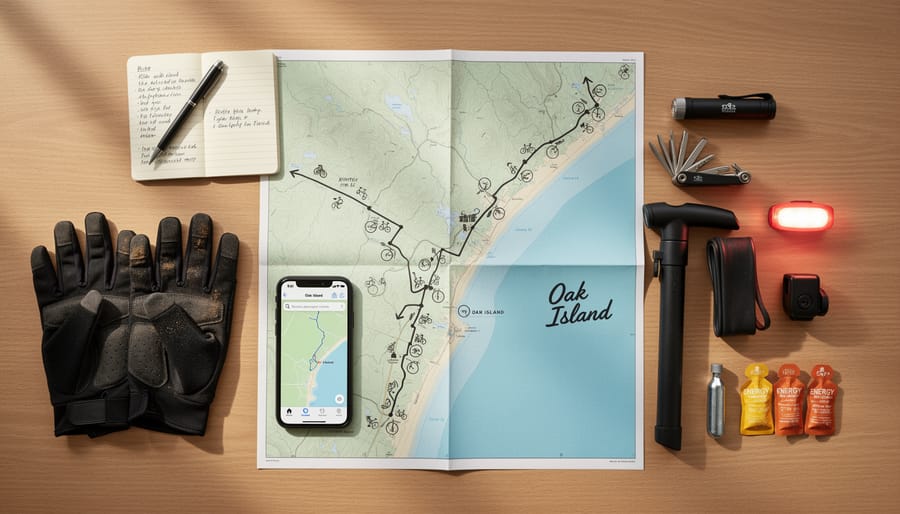
Start with the story, then let the road follow it. Oak Island sits just off the Nova Scotia shore, and the causeway views alone are worth a slow pace and a few photos. From there, the best rides stitch together a handful of stops: a lookout over the water, a historic waterfront in a nearby Mahone Bay town, a quiet churchyard, a bakery worth the detour. Think of it as drawing a line between places where legend and landscape seem to lean on each other.
Pick up a paper map or download an offline one before you leave, since signal can vanish in the trees. Mark your stops, then add a few “maybe” spots in case the day goes your way. Oak Island itself has limited public access, so check guided tour schedules and access rules ahead of time, and confirm them with local operators rather than assuming. Tours can fill up, and a missed booking can reshape your whole afternoon.
Then build in buffer. A ride that looks like two hours on paper tends to become four once you start chatting with locals or following a side road that “just looks interesting.” Leave slack for photos, snack breaks, and the odd wrong turn. Some of the best discoveries here happen when you’re running a little behind, and the island has a way of rewarding riders who stop to look closer.
2. Read the Terrain: Coastal Trails, Gravel, and Soft Ground
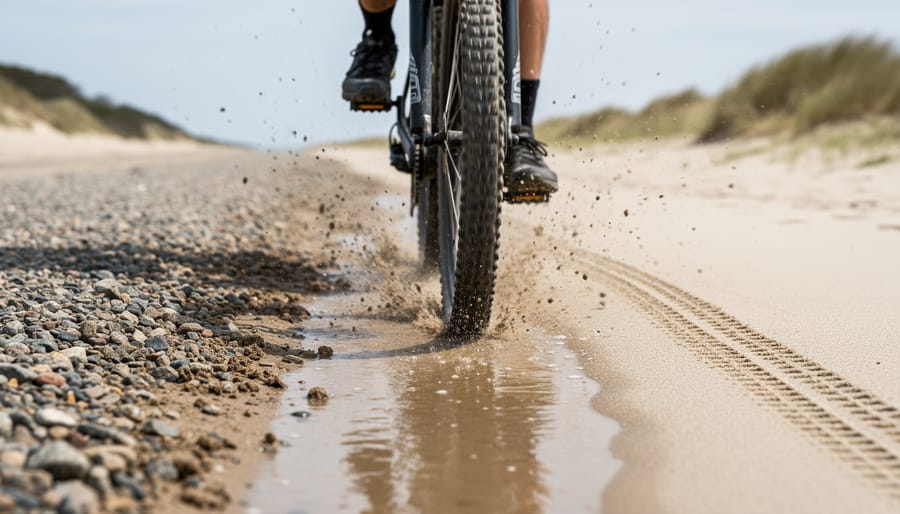
Coastal Nova Scotia rarely gives you one surface for long. A single ride can move from packed gravel to a root-laced forest track, then into wet clay or a patch of loose sand, sometimes within a few minutes. The trails around Mahone Bay are a good example, and the Barrington Bay Trail shows how quickly the ground can change as you follow the shoreline.
A few simple habits make every surface easier. Keep your throttle or pedaling smooth, because sudden bursts of power are what send a wheel sliding on clay or gravel. Look well ahead, not at the patch of ground right in front of you. Your bike tends to follow your eyes, so pick your line early and let your body relax into it.
Tire pressure matters more than most riders expect. Slightly softer tires grip better on loose gravel and sand, while firmer pressure suits hard-packed tracks. Adjust before you set off, and be willing to change it if the day turns out different than you planned.
Local riders will tell you that conditions shift fast near the water. A sun-baked trail can turn greasy after a sea fog rolls in, and shaded forest tracks stay damp long after the rest of the path has dried. Roots and rocks in those cool, mossy stretches get slick, so slow down and stay loose through them. When in doubt, ease off and let the terrain set the pace.
3. Dress and Pack for Fast-Changing Maritime Weather
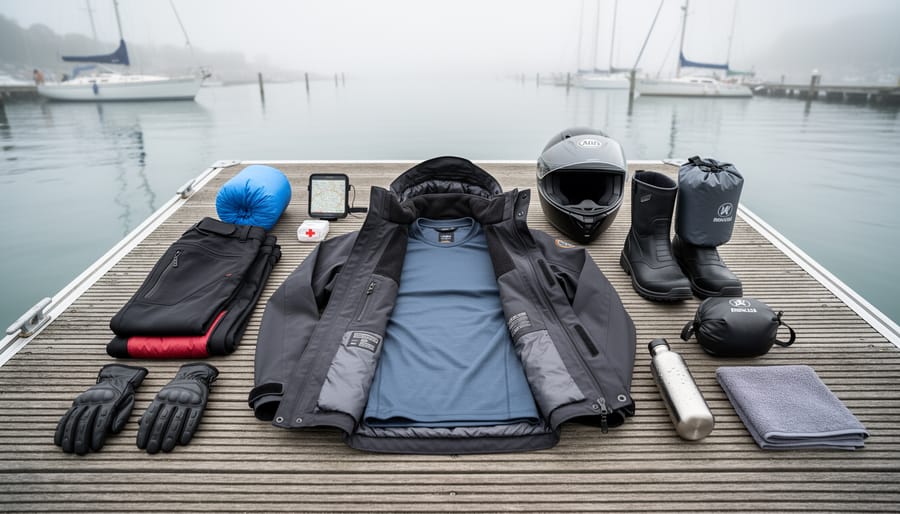
Anyone who’s spent time near Mahone Bay knows the weather has a mind of its own. You can leave the dock under bright sun and find yourself wrapped in fog an hour later, with a sea breeze cutting right through a thin shirt. The trick is layering, not heavy bundling.
Start with a moisture-wicking base layer, add a light insulating mid-layer, and top it with a packable, waterproof shell. Sudden showers roll in off the Atlantic with little warning, and a shell that tucks into a small bag earns its space quickly. In spring and autumn, bring one more insulating layer than you think you’ll need, since mornings stay cool and the coast holds a chill long after the sun rises. In summer, protect yourself from biting insects, especially on shaded forest tracks and near wet ground at dawn and dusk.
Here’s a compact checklist to keep your pack ready for a day ride in these conditions:
- Water, plus a refillable bottle or hydration pack
- Energy-rich snacks like nuts, fruit, or bars
- Basic repair kit with a spare tube or tire plug, multitool, and pump
- Compact first aid kit with bandages and blister care
- Fully charged phone with offline maps downloaded
- Insect repellent for warmer months
- Packable rain shell and one spare insulating layer
Download your maps before you leave your accommodation, because coverage can fade among the trees and along the shoreline. A well-packed bag means weather stays an interesting part of the day rather than a reason to cut it short.
4. Ride Within Your Limits and Choose the Right Trail
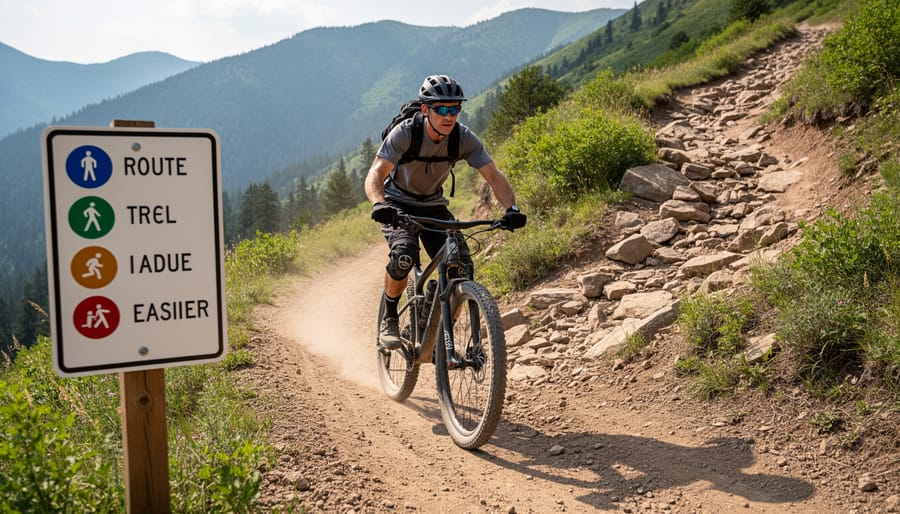
Every trail around Mahone Bay has a story, but the best stories come from riders who finish their day with energy to spare. Match the route to your actual experience, not your ambition. If you’ve mostly ridden paved paths, a root-tangled forest track with wet clay is a poor place to find out what you can handle.
Start easy. A gentle, well-packed gravel route lets you get a feel for the terrain, the bike, and the coastal conditions before you commit to anything harder. You can always add a tougher loop later in the day, but it’s much harder to undo a hard one once you’re deep into it.
Pace yourself like someone with a long afternoon ahead. Fatigue sneaks up on you, and tired riders make sloppy choices on loose gravel and slick roots. A steady rhythm, regular water breaks, and a few stops to take in the bay views will carry you much farther than a sprint.
Learn to turn back. Fog rolling in, a trail turning boggy, or a heavy feeling in your legs are all good reasons to call it. There’s no shame in it, and the mystery of this place will still be waiting tomorrow.
Not sure where to begin? Ask local outfitters or visitor information staff about beginner-friendly routes in the region. They know which trails are drying out, which are rough, and which are best saved for another day.
5. Ride With a Buddy and Leave a Plan Behind
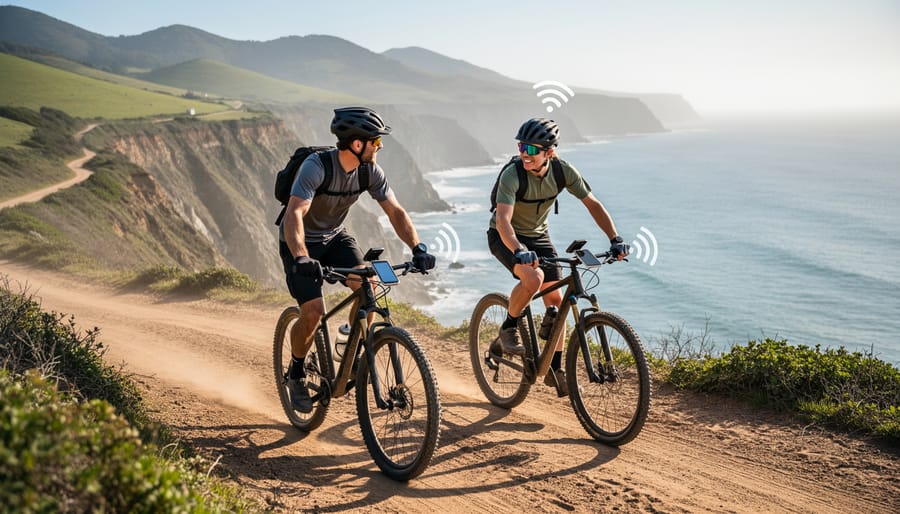
Riding with a buddy is the single easiest way to make a trail day safer and a lot more fun. Two riders can share the load of a flat tire, spot a wrong turn before it costs an hour, and keep each other honest about when to call it. If something goes wrong on a quiet backroad, you’re not facing it alone.
Before you roll out, leave a plan behind. Tell someone at your accommodation where you’re headed, which roads or trails you intend to ride, and when you expect to be back. A simple note left at the front desk works just as well as a text. If you’re late, that person knows where to start looking.
Agree on the small things up front. Pick a few hand signals for slowing down, stopping, or pointing out a hazard, since engines, wind, and surf can swallow your voice. Choose a meeting point, like a waterfront pull-off or a village café, in case you get separated.
Here’s the part that catches people off guard: cell coverage can be patchy in the wooded stretches and along the coast. Download offline maps before you leave, carry a paper backup, and don’t count on a signal to sort out a mix-up. A little planning keeps the mystery on the map, not in your afternoon.
6. Respect Private Land, Heritage Sites, and Local Wildlife

Some of the best stories on Oak Island come from the ground itself, which is exactly why it deserves a gentle touch. Stick to designated routes, even when a tempting side path seems to wink at you from the trees. Posted signs and property lines aren’t obstacles to your adventure; they mark land that belongs to someone, often someone whose family has lived here for generations.
The island’s treasure-hunting history is a living chapter, not a closed one. Many locals feel a deep connection to the Money Pit and its legends, so approach conversations with curiosity rather than skepticism. Ask questions, listen to the stories, and let the mystery stay a little bit mysterious. If you’d like to see the grounds the proper way, a guided tram tour lets you take in the history without stepping where you shouldn’t.
Give wildlife plenty of room, too. Deer, birds, and the occasional fox are just going about their day, so keep your distance and never feed them. Whatever you carry in, carry out: wrappers, bottles, even apple cores. For more on settling in nearby, these local resort tips can help you plan a respectful, comfortable stay.
7. Time Your Ride for Light, Tides, and Seasons
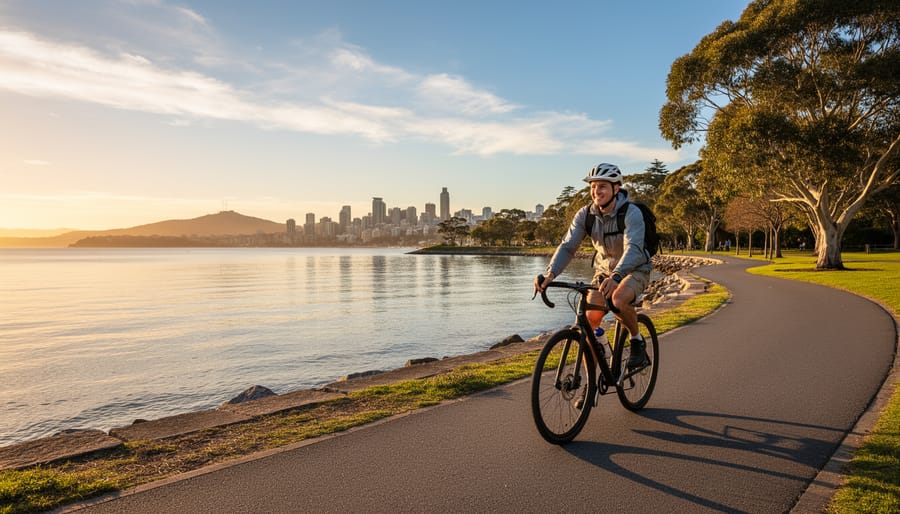
Timing can make or break a ride on the South Shore. The light changes quickly out here, and so does the mood of the landscape.
Mornings are often the sweet spot. Temperatures run cooler, the trails are quieter, and a soft mist sometimes hangs over Mahone Bay in a way that makes every bend feel like the start of a story. Cooler air is also kinder to you and your gear on longer climbs or gravel stretches.
Then there’s golden hour. In the last hour or two before sunset, the light turns warm and low across the water, and the shoreline looks almost unreal. It’s a lovely time to ride, but build in a generous cushion. Under tree cover, a trail can go from glowing to gloomy faster than you’d expect, and tricky ground is much harder to read in fading light.
Seasons matter too. Late spring can mean soft, damp ground, while summer brings longer days and more bugs. In autumn, daylight shrinks noticeably and evenings turn chilly, so start earlier and pack an extra layer.
Whatever the month, plan to be off the trail before dusk. Check the sunset time before you set out, carry a small light just in case, and treat the tides and the weather as part of your route plan. Coastal conditions rarely stay still for long.
8. Turn the Ride Into a Full Adventure: Stops, Stays, and Local Know-How
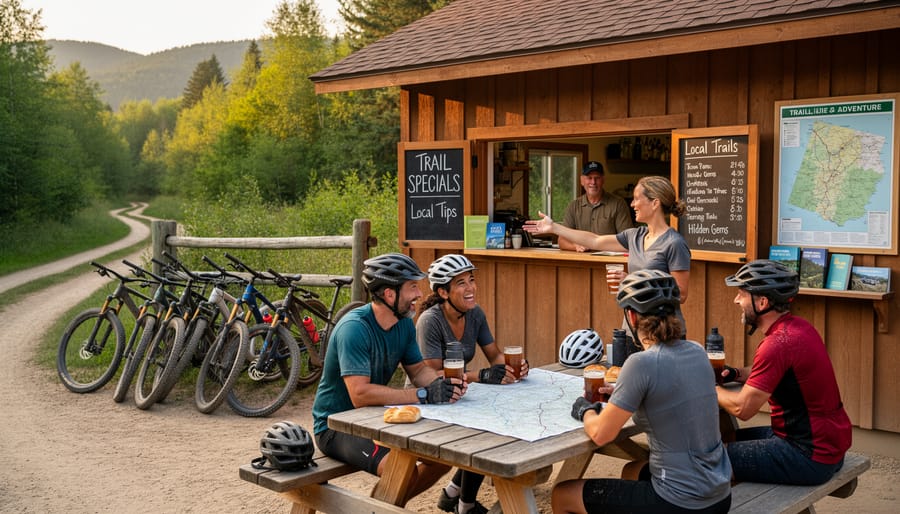
The best adventure rides rarely end when the engine cuts or the pedals stop. Think of your ride as the middle chapter of a longer day, with something worth doing before and after it.
Start by pairing your ride with the area’s other experiences. A morning on the backroads leaves you hungry for a different pace in the afternoon, whether that’s a guided tour of the island’s story or a boat excursion out on Mahone Bay. Seeing the same shoreline from the water that you cycled along earlier gives you a fresh sense of how the land and legend fit together. Waterfront stops make good breathers too. Pull over, stretch, and let the salt air do its work before the next leg.
Then there’s the part that’s easy to rush past: talking to people. Ask your host, a shop owner, or whoever’s pouring your coffee which road has the best view or where the gravel gets soft after rain. Locals carry the kind of knowledge no map shows, and the best clues around here have always come from conversation. A quick chat can turn a good route into a memorable one.
When the day winds down, a comfortable resort or inn makes all the difference. Hot food, a warm bed, and a window facing the water let you recharge and plan tomorrow’s route with fresh legs.
Adventure Riding Questions Visitors Often Ask
Can I ride on Oak Island itself?
Access to the island is limited and often tied to guided experiences, so don’t assume trails are open for riding. Confirm current rules with local operators before you go, and save your pedaling for the surrounding Mahone Bay trails and backroads.
What bike or gear suits the area?
A sturdy bike with tires that handle gravel and soft ground is a good starting point, along with a helmet, gloves, and layers. An e-bike works well on hilly stretches, but check that your chosen route allows them.
Can beginners enjoy riding here?
Absolutely. Start with easier routes, keep a relaxed pace, and ask local outfitters or visitor staff for beginner-friendly options.
What if the weather turns?
Coastal conditions shift fast, so carry a rain layer and be ready to turn back. Wet clay and roots get slippery, which is reason enough to head for shelter and come back another day.
Where do you find the best trail intel? Locals. Innkeepers, tour guides, and shop owners tend to know which backroads are rideable this week and which stories belong to which bend in the road. A short chat before you set out can save you a wrong turn and might hand you a tale worth chasing.
The best trail adventures around Mahone Bay reward the riders who prepare well, move patiently, and stay curious about the place beneath their wheels. Oak Island’s mysteries give every ride a bit of that treasure-hunter’s thrill, as if each bend in the trail might be part of a larger quest still unfolding.
So study your route, pack for the fog, and tell someone where you’re headed. The island has kept its secrets for centuries, and it seems in no hurry to give them up. Maybe your ride will bring you a little closer.