
Nova Scotia protects two spectacular national parks that anchor opposite ends of the province: Cape Breton Highlands National Park along the legendary Cabot Trail in the north, and Kejimkujik National Park and National Historic Site in the southwest wilderness near Oak Island. Both offer dramatically different landscapes and experiences, from the highlands’ rugged coastal cliffs and boreal plateaus to Kejimkujik’s dark-sky stargazing and ancient Mi’kmaq petroglyphs carved into lakeside rock.
If you’re planning a 2026 Oak Island tram tour you’re already positioned perfectly to explore these protected lands. Kejimkujik sits just 90 minutes northwest of the famous treasure island, while Cape Breton Highlands rewards the four-hour drive north with some of Atlantic Canada’s most breathtaking scenery.
This summer brings exceptional value: the Canada Strong Pass returns from June 19 to September 7, 2026, offering free admission to both national parks and historic sites like Fortress of Louisbourg. That means families can explore centuries-old trails, paddle pristine backcountry waters, and walk coastlines where ancient mysteries still linger beneath the forest canopy without paying day-use fees during peak season.
The real intrigue lies in what these parks preserve beyond scenic vistas. Kejimkujik’s Seaside region, a distinct coastal area near Port Joli, guards secrets of Acadian settlement and Indigenous history that rival Oak Island’s enigmas. Meanwhile, Cape Breton Highlands conceals stories in every fog-draped valley and wind-carved headland along its 37639 Cabot Trail address in Ingonish Beach. Both parks invite discovery on your terms, whether you’re chasing historical whispers or simply seeking wilderness that still feels untamed.
Why Nova Scotia’s National Parks Matter for Oak Island Explorers
You’ve spent days circling Oak Island’s Money Pit, piecing together cryptic clues and centuries-old legends. But Nova Scotia’s real treasure map extends far beyond that infamous shoreline. The province’s national parks protect something Oak Island’s excavators have never uncovered: intact ecosystems where ancient Mi’kmaq stories are carved into living rock, where dark skies reveal constellations that guided pre-Columbian navigators, and where wilderness remains as untouched as it was before the first treasure hunter set foot on these shores.
These protected lands matter because they offer what the Money Pit legend promises but can’t deliver: discovery you can actually experience. Kejimkujik’s petroglyphs predate Oak Island’s earliest theories by millennia, telling stories the island’s shaft and flood tunnels never will. Cape Breton Highlands’ clifftop trails reveal geological secrets written across 600-million-year-old rock faces. While Oak Island asks you to imagine what might be buried below, the national parks let you witness what’s been preserved above, moose browsing highland plateaus at dawn, harbor seals hauling out on pristine Port Joli beaches, and night skies so dark that the Milky Way casts shadows.
The mystery-seeker’s mindset that drew you to Oak Island translates perfectly to these wilderness areas. Both require patience, curiosity, and a willingness to venture off the beaten path. The difference? In the national parks, the treasure is guaranteed.
Kejimkujik: The Closest National Park to Oak Island
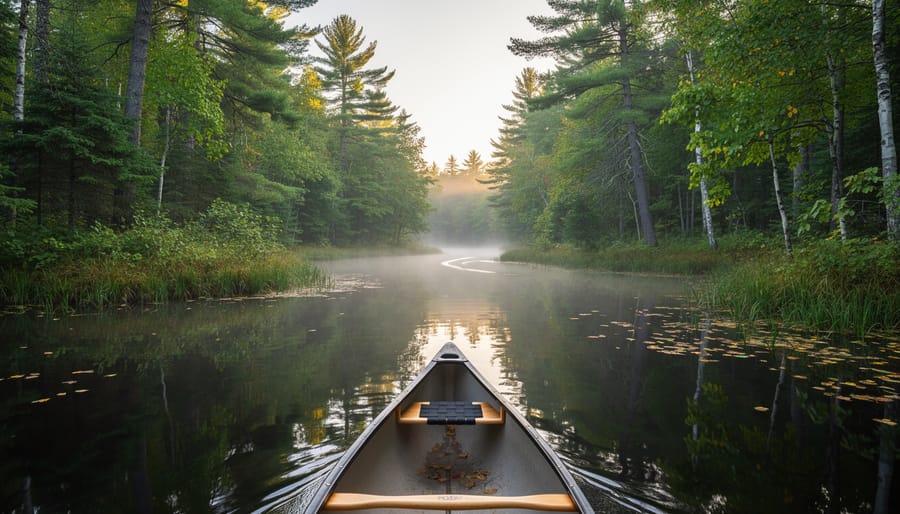
The Inland Experience: Waterways and Ancient Mysteries
Paddle into Kejimkujik’s interior and you’ll navigate the same waterways Mi’kmaq families traveled for millennia. The main park protects over 381 square kilometers of interconnected lakes and rivers, with canoe routes ranging from gentle day trips to multi-day backcountry circuits that demand real wilderness skills. You can reserve one of 46 backcountry campsites scattered across remote lake shores, where the only sounds after sunset are loons calling and paddles dipping into dark water.
The park’s true ancient mysteries lie along its shorelines and portage routes. More than 500 Kejimkujik petroglyphs mark slate rock faces near the water’s edge, carved by Mi’kmaq artists centuries before Europeans arrived in Nova Scotia. These aren’t crude scratches, they’re sophisticated images of people, animals, and geometric patterns that tell stories we’re only beginning to understand. Some depict eight-pointed stars and crosses that scholars debate, others show detailed hunting scenes. Unlike Oak Island’s elusive treasure, these carvings are tangible proof of human presence stretching back at least 2,000 years.
Rangers lead interpretive paddles to accessible petroglyph sites during summer months, but independent paddlers with sharp eyes can spot carvings from their canoes. The slate weathers slowly, meaning what you see today looks much as it did when carved. That direct connection to pre-contact Indigenous culture offers a different kind of treasure hunt, one where the prize is witnessing art that predates the Money Pit legend by over a millennium.
Kejimkujik Seaside: Port Joli’s Coastal Secrets
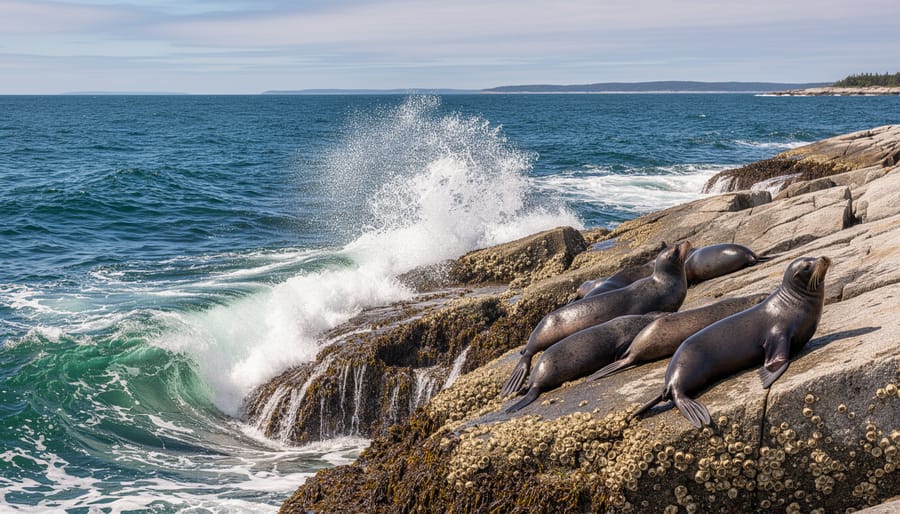
Twenty-five kilometers of raw Atlantic coastline separate Kejimkujik Seaside from the inland park, making it feel like an entirely different world. While the main park whispers through forests and waterways, this coastal counterpart roars with surf and salt air, a wild stretch of shoreline that few Oak Island visitors know exists.
Port Joli Head anchors the experience, where white sand beaches dissolve into kelp-draped rocks and tide pools teeming with life. The 8-kilometer round-trip coastal trail winds along dramatic headlands, revealing secluded coves where grey and harbor seals haul out on offshore rocks. Time your visit with low tide and you’ll discover ancient wave-cut platforms and geological formations that tell stories older than any human mystery.
The beaches here rank among Nova Scotia’s most pristine, largely because of their remoteness. St. Catherines River Beach stretches for nearly two kilometers of soft sand, backed by dunes and coastal forest. Unlike the crowded shores near Halifax, you might share this space with only the piping plovers nesting in the beach grass and the occasional seal bobbing beyond the breakers.
What makes Kejimkujik Seaside particularly compelling for adventurers is its separation from the main park. There’s no through-road connecting them, which preserves the coastline’s untouched character. Day-use only, no services, just you and the elements. It’s the kind of place where you feel the weight of the ocean’s permanence against the fleeting nature of human concerns, treasure hunts included.
Pack everything you need, including water. The nearest facilities are back in Port Joli village, and cell service is unreliable at best.
Cape Breton Highlands: Where Mountains Meet the Ocean
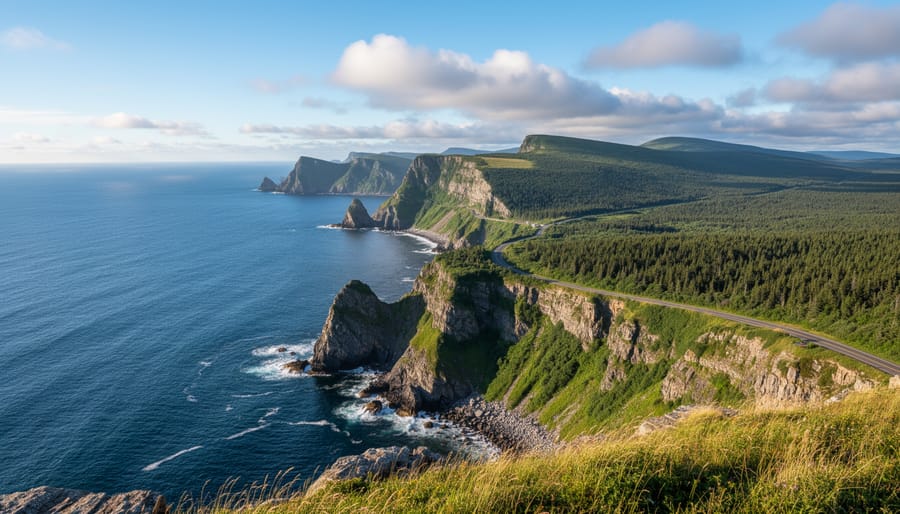
Skyline Trail and Signature Hiking Experiences
The Skyline Trail stands as Cape Breton Highlands’ crown jewel, a 7.5-kilometer loop that delivers some of Atlantic Canada’s most dramatic coastal scenery. Perched on the western edge of the park, this moderate trail climbs through boreal forest before opening onto exposed headlands where the Gulf of St. Lawrence stretches endlessly below. The famous boardwalk section hovers above windswept barrens, offering unobstructed views that feel less like hiking and more like walking through sky. Moose sightings are common here, particularly at dawn, adding an element of wildlife encounter to the visual spectacle.
Beyond Skyline, the park’s 26 trails range from gentle waterfront strolls to challenging highland ascents. The Franey Trail rewards climbers with panoramic vistas from 425 meters above sea level, while the coastal Bog Trail offers an easier introduction to the park’s unique wetland ecosystems. The terrain shifts dramatically, you can start your morning on windswept cliffs where pilot whales breach offshore, then spend your afternoon in cool, moss-covered valleys that feel like entirely different worlds. This variety makes the Highlands a genuine hiker’s paradise, where each trail reveals a distinct personality.
What sets these trails apart isn’t just the scenery, it’s the sense of standing at the edge of something wild and ancient, where the land meets the sea with raw, uncompromising power. The views don’t just photograph well; they stay with you.
Wildlife Encounters in the Highlands
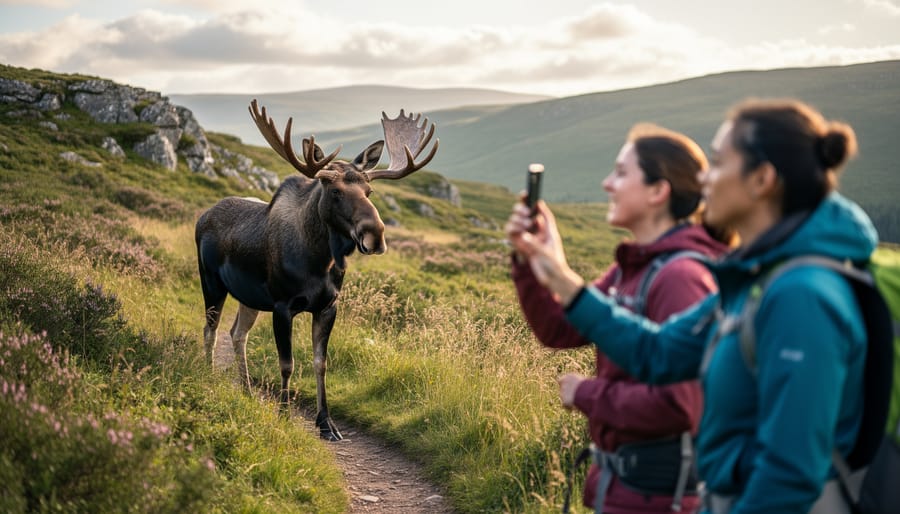
The highlands transform into a living theater where wildlife commands the stage. Moose emerge from the forest at dawn and dusk, their massive silhouettes stepping onto the roadway with an unconcerned majesty that stops traffic cold. These encounters happen most frequently along the Cabot Trail during early morning drives, when fog still clings to the valleys and the giants browse roadside vegetation. Unlike Oak Island’s buried secrets, this treasure announces itself with snapping branches and breath you can see in the cool air.
Bald eagles patrol the coastline, their white heads stark against the dark cliffs as they wheel above the Gulf of St. Lawrence. Watch for them perched in the dead snags of wind-battered spruces or riding thermals above French Mountain. The moment one stoops toward the water and emerges with a fish gripped in its talons feels primordial, connecting you to something older than any human mystery.
Offshore, pilot whales travel in tight-knit pods through the waters visible from lookout points along the western shoreline. Their black dorsal fins cut the surface in synchronized arcs, and if you’re patient at Pleasant Bay or Fishing Cove River, you might witness an entire family group surfacing together. The thrill of spotting them shares the same pulse-quickening quality as discovering something hidden, except here the discovery moves, breathes, and vanishes back into the blue depths on its own terms.
Planning Your National Parks Adventure from Oak Island
Starting from Oak Island, your national parks adventure unfolds naturally as you explore southwestern Nova Scotia before venturing to Cape Breton. The closest park, Kejimkujik, sits roughly 100 kilometers west of Mahone Bay, a scenic 90-minute drive through rolling countryside. Cape Breton Highlands demands more commitment at approximately 400 kilometers northeast, but the five-hour journey through Nova Scotia’s heartland becomes part of the experience.
The 2026 Canada Strong Pass dates from June 19 to September 7 eliminate admission fees at both national parks, plus Fortress of Louisbourg. That’s nearly three months of free entry, a significant advantage for travelers planning multi-day park visits during peak summer season. Base yourself in Mahone Bay for Kejimkujik explorations, then shift north to Pleasant Bay or Chéticamp for Cape Breton Highlands access.
| Park | Distance from Oak Island | Signature Experience | Best Season |
|---|---|---|---|
| Kejimkujik Inland | ~100 km (90 min) | Mi’kmaq petroglyphs, canoe routes | May-October |
| Kejimkujik Seaside | ~120 km (100 min) | Pristine beaches, harbor seals | June-September |
| Cape Breton Highlands | ~400 km (5 hrs) | Skyline Trail, Cabot Trail drive | September-October |
Trip-chaining works beautifully along Nova Scotia’s South Shore. After exploring Oak Island, head southwest to Kejimkujik’s inland waterways, then continue to the Barrington Bay Trail before circling back through Liverpool to reach Kejimkujik Seaside at Port Joli. You can weave in coastal trails like the Aspotogan Trail or Bay to Bay Trail for shorter hiking breaks between park visits.
September transforms Cape Breton Highlands into a canvas of autumn color, while Kejimkujik’s dark skies shine brightest on clear summer nights. Reserve campsites and Cape Breton Highlands Skyline Trail parking well ahead, that trail requires advance booking during peak months. Pack layers regardless of season; coastal fog can roll in without warning, and highland temperatures drop fast after sunset. The Canada Strong Pass covers admission, but camping, parking reservations, and backcountry permits remain separate charges at standard rates.
Beyond the Parks: National Historic Sites Worth the Detour
While Nova Scotia’s national parks deliver wilderness and natural drama, the province’s historic sites offer a different kind of mystery, one wrapped in cannons, colonial intrigue, and centuries-old stone fortifications. If Oak Island’s treasure legends have you hooked on historical puzzles, these detours will scratch that same itch.
Fortress of Louisbourg National Historic Site stands as the crown jewel. This 18th-century French fortress on Cape Breton’s windswept coast is one of North America’s largest historical reconstructions. Costumed interpreters inhabit the stone streets, musket demonstrations echo across the ramparts, and the whole experience feels like stepping through a portal into 1744. The fortress’s own mysteries, hidden tunnels, disputed siege tactics, and the fate of French colonial ambitions, make it irresistible for anyone drawn to Oak Island’s enigmas. Better yet, admission is free from June 19 to September 7, 2026, under the Canada Strong Pass program, the same benefit covering the national parks.
Halifax Citadel National Historic Site offers similar time-travel appeal closer to the city. The star-shaped fort overlooking Halifax Harbour witnessed everything from military drills to wartime espionage, and its noon gun still fires daily, a tradition unbroken since the 1850s.
Port-Royal National Historic Site near Annapolis Royal reconstructs North America’s first European settlement north of Florida. Walking through the 1605 habitation where Champlain and his crew survived their first brutal winter adds historical depth to any trip. After exploring these sites, you can return to the Oak Island Resort with a fuller picture of Nova Scotia’s layered past, from Mi’kmaq presence to European fortifications to modern-day treasure hunts.
The legends of Oak Island have drawn you to Nova Scotia, but the real treasure waiting to be discovered extends far beyond a single island’s mysteries. From the ancient Mi’kmaq petroglyphs carved into bedrock at Kejimkujik to the windswept highlands where the Cabot Trail traces the continent’s edge, these national parks hold secrets that no treasure hunter ever buried. They’re written in dark skies unmarred by city lights, in moose tracks crossing remote trails, and in coastal landscapes that have witnessed centuries of human stories.
Your quest doesn’t end at the Money Pit. It expands across protected wilderness areas where every trail reveals something unexpected, every campsite offers solitude beneath stars, and every park tells part of Nova Scotia’s deeper narrative. The treasure you’ll carry home won’t fit in a chest, it’s measured in sunrise paddles through silent waterways, in the moment a bald eagle glides overhead, in standing where mountains plunge dramatically into the Atlantic. Take advantage of the 2026 Canada Strong Pass and let your Oak Island curiosity lead you into landscapes that prove the province’s greatest riches were never buried at all.